Why Working with People Is the Most Important Skill for Videographers
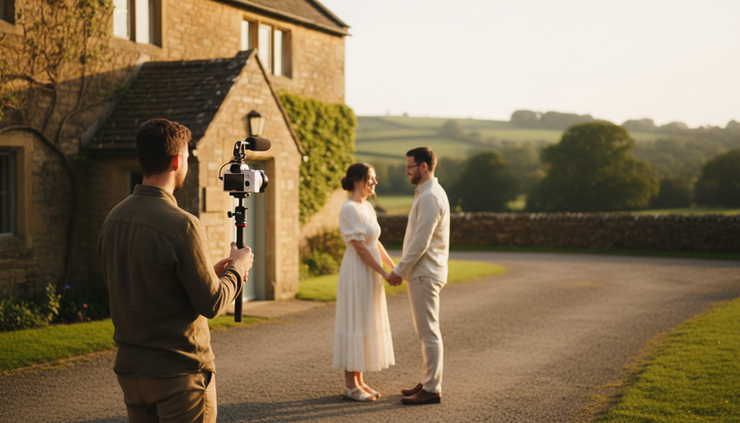
A wedding camera doesn’t film itself. It’s held by a person, pointed at people, during one of the most emotional days of their lives.
That’s why the most important skills for a videographer isn’t owning nice equipment or knowing where to stand during the ceremony. Those things matter, of course. Good sound matters. Framing matters. Knowing how to handle low light in a barn in Yorkshire matters too.
But if someone can’t read a room, calm nerves, adapt to different needs, and make people feel comfortable, the film will show it.
Over the years, I’ve worked with all kinds of people. Young, old, people with special needs, people with physical disabilities, people who are camera shy, people who love the camera, and plenty who’d probably describe themselves as very ordinary. The funny thing is, nobody is ordinary once you really pay attention.
And that’s the heart of good wedding filming. It’s not just recording what happens. It’s noticing who people are, then giving them enough space to be themselves.
A wedding day is full of people, not just moments
It’s easy to talk about wedding films as a list of key moments.
The walk down the aisle.
The vows.
The confetti.
The speeches.
The first dance.
Those moments are important, but they don’t happen in a vacuum. They happen around families, friends, children, grandparents, venue staff, registrars, celebrants, photographers, musicians, and guests who may all need something different from the day.
A skilled videographer has to notice all of that without making a fuss.
For example, an older grandparent might need more time to get into position for a family shot. A child might suddenly run across the aisle. Someone with a physical disability might need clear space, a chair nearby, or simply not to be rushed. A guest with sensory needs might feel uncomfortable if a camera is too close for too long.
None of this is rare. It’s normal life. Weddings bring generations and personalities together in one place, often for a full day. That mix is what makes them lovely, lively, and sometimes a little unpredictable.
The job is to work with it, not fight it.
That means being:
Organised, so the couple don’t have to worry.
Calm, so no one feels hurried or watched.
Kind, because kindness changes how people behave on camera.
Approachable, so guests feel safe asking a question or saying they’re uncomfortable.
Flexible, because plans change and people matter more than schedules.
People notice these things. In Yorkshire, whether a wedding is in Leeds, Huddersfield, Barnsley, Sheffield, or a quiet village venue, the same thing is true. Old and young guests, people with disabilities, and those who simply hate being filmed all respond better to someone who treats them with patience and respect.
That kind of people skill isn’t a nice extra. It’s part of the craft.
Comfort changes the footage
Most people aren’t used to being filmed. They might be fine taking a quick photo on a phone, but a wedding video feels different. It lasts longer. It moves. It records voices, nerves, little looks, laughter, and emotion.
If someone feels awkward, their body shows it.
They stiffen their shoulders. They stop laughing naturally. They look straight at the camera, then look away. They start performing instead of being present.
A good videographer knows how to disappear when needed, and how to gently guide when people need help. That balance is hard to teach because it comes from experience with real people.
There are times to say, “Just walk slowly and chat to each other.” There are times to say nothing at all. There are times to step back because a private moment is happening, and filming too closely would spoil it.
The best footage often comes when people forget they’re being filmed.
That doesn’t mean hiding in bushes or being distant all day. It means creating trust early.
A simple hello helps. A quick smile helps. Explaining what’s happening in plain language helps too. If a couple or guest knows what to expect, they’re much more likely to relax.
This is one reason pre-wedding conversations matter. Not long, awkward meetings. Just proper human conversations. Who’s nervous? Are there family situations to be aware of? Is there anyone who doesn’t want to be filmed closely? Does anyone need extra time, space, or support?
Those answers shape the whole day.
They also protect the feeling of the film. Because a wedding film should feel like the day felt, not like everyone was pushed through a set of instructions.

Being calm is a practical skill
Calmness can sound vague, but on a wedding day it’s very practical.
Timings slip. Buttonholes go missing. Cars arrive late. Rain appears from nowhere. A speech runs longer than expected. A toddler decides the ceremony is the perfect time to sing. Someone important is stuck in traffic on the M1.
None of this is shocking. Weddings involve lots of moving parts, so little surprises are part of the day.
The question is how suppliers react.
If a videographer panics, rushes people, or starts looking stressed, that stress spreads. Couples pick up on it. Families pick up on it. Other suppliers pick up on it.
A calm videographer quietly adjusts.
If the light changes, they move.
If the schedule shifts, they adapt.
If someone needs a break, they give them a minute.
If the room feels tense, they don’t add pressure.
This matters because weddings are emotional environments. Psychology research has long shown that emotions can be contagious in groups. You don’t need a lab coat to see it. One flustered person can raise the temperature of a room. One calm person can lower it.
That’s why calm isn’t just a personality trait. It’s part of good service.
The same applies to being organised. When a videographer knows the plan, checks the important timings, understands the venue layout, and communicates clearly, they can be relaxed on the day. Organisation creates calm.
And calm creates better footage.
This is especially important during ceremonies. A videographer needs to be in the right place, but not distracting. They need to capture sound, movement, and reaction, but not become part of the moment. Guests should be thinking about the vows, not the person filming them.
The same goes for speeches. Some speakers are confident. Others are nervous. A kind face behind the camera can help more than people realise. No big gestures. No fuss. Just a steady presence that says, “You’re doing fine.”
Experience with different needs makes a real difference
Every person deserves to feel respected at a wedding. That includes people who move differently, communicate differently, process noise differently, or need more time.
Working with people with special needs or physical disabilities teaches a videographer something valuable: don’t assume.
Don’t assume someone can stand for long.
Don’t assume everyone wants close-up footage.
Don’t assume a person who is quiet is unhappy.
Don’t assume a guest using a wheelchair needs help unless they ask.
Don’t assume a child who looks overwhelmed is being difficult.
Ask when appropriate. Listen properly. Keep dignity at the centre of it.
In the UK, the Equality Act 2010 protects disabled people from discrimination in many areas of public life. Wedding suppliers who care about their work should go beyond simply avoiding discrimination. They should think ahead and make the experience easier where they can.
For a videographer, that might mean:
Keeping pathways clear when filming.
Avoiding sudden close filming with guests who may feel anxious.
Giving clear, simple direction when needed.
Allowing extra time for movement between spaces.
Checking whether a microphone, camera position, or light might bother someone.
Speaking to people directly, not over them.
None of these things require grand gestures. They require awareness.
A wedding day should not revolve around the camera. The camera should fit around the people.
That approach also helps with guests who don’t have specific needs but still feel uncomfortable. Plenty of people hate being filmed. Some worry about how they look. Some are shy. Some have had a hard time recently and don’t want attention. Some just prefer to stay in the background.
Respecting that doesn’t weaken the film. It makes it more honest.

The best films come from trust
Trust is built in small ways.
Turning up on time. Knowing names where possible. Being polite to venue staff. Working well with the photographer. Listening when someone says they’d rather not be filmed. Being friendly without taking over.
All of that affects the finished film.
When couples trust their videographer, they stop checking what’s happening. They stop wondering if someone is filming the important bits. They relax into the day. That makes the footage warmer, more natural, and more personal.
When families trust the videographer, they stop bracing for the camera. They laugh properly. They hug properly. They forget to arrange their faces. That’s where the good stuff is.
And when other suppliers trust the videographer, the day runs better. Wedding days are shared spaces. A photographer needs room. A venue coordinator may need access. Caterers have timings. Registrars and celebrants have rules. Nobody benefits from one person acting like their job matters more than everyone else’s.
Good Videography fits into the day with care.
It captures the atmosphere without stealing attention from it.
That takes social awareness. It takes patience. It takes the ability to be friendly to a nervous child, respectful to an elderly relative, clear with a busy venue team, and gentle around emotional moments.
A camera can’t do that on its own.
Kindness shows up on screen
You can often tell how people felt around the person filming them.
If they felt rushed, the film feels stiff.
If they felt watched, the film feels guarded.
If they felt safe, the film breathes.
Kindness doesn’t mean being soft or unprepared. It means caring enough to do the job properly without making people feel like props.
A kind videographer still gives direction. They still keeps things moving when time is tight. They still make sure the key parts are captured. But they do it in a way that keeps people comfortable.
There’s a big difference between barking, “Stand there,” and saying, “If you’re happy to, could you come a little closer so we can keep everyone together?”
There’s a big difference between pushing a camera into a crying person’s face and filming emotion from a respectful distance.
There’s a big difference between treating a wedding as a shoot and treating it as a family event that happens to be filmed.
The second approach always wins.
It also reflects what couples usually want from a wedding film. Not a performance. Not a fake version of the day. They want to hear voices they love, see people they care about, and remember how it felt.
That only happens when the people in the film are treated well while it’s being made.

The camera matters, but the person holding it matters more
A wedding film is technical, emotional, and practical all at once. The technical side has to be solid, but it’s only part of the job.
People skills shape everything.
They shape how relaxed the couple feels in the morning.
They shape whether guests act naturally.
They shape how smoothly the videographer works with the photographer and venue.
They shape how respectfully older relatives, young children, and disabled guests are included.
They shape whether the film feels real.
After years of filming weddings and working with all kinds of people, that’s the lesson that keeps coming back. You can buy equipment. You can learn camera settings. You can practise editing.
But learning how to work well with people takes time, humility, and genuine care.
And on a wedding day, that care is what people remember. Not the camera. Not the kit bag. Not the clever angle from the back of the room.
They remember feeling comfortable. They remember being treated kindly. They remember that the person filming didn’t make the day harder.
That’s what makes the difference between a film that simply records a wedding and a film that feels like the people in it.


Comments