Timeless Wedding Films to Cherish for Generations

Some parts of a wedding day fade faster than expected. The flowers are gathered up, the cake is cut, the table plan is packed away, and the dress is carefully stored. What remains most vividly are the feelings, the voices, the movement, and the people who filled the room.
That is where a wedding film holds its value.
Videography is a product offering longevity. It gives life to the details that photographs alone cannot fully carry: the sound of a parent’s voice, the way hands shake during the vows, the laughter while hair and make-up are being done in pyjamas, and the joy of dancing late into the evening in glamorous outfits.
As a storyteller, my aim is to create a personalised film of your wedding day that feels true to you. A documentary-led feature film should do more than record what happened. It should take you back to the day you lovingly planned, financed, organised, and lived with your whole heart.

A wedding film preserves more than the schedule
A wedding day is often planned around timings. Hair and make-up. Ceremony arrival. Confetti. Speeches. First dance. Evening guests. Last song.
Those timings help the day run smoothly, but they are not the story.
The real story lives in the moments between the planned events:
A friend trying to fasten a bracelet with shaky hands
A parent seeing the finished outfit for the first time
A partner waiting at the front, trying to stay composed
Guests laughing during the speeches
Children running across the dance floor long before the first dance begins
The small glance shared by the couple after the ceremony
A documentary-led film pays attention to these pieces. It follows the day as it naturally unfolds, rather than turning it into something staged or forced. The result feels personal because it is built from real reactions, real sound, and real emotion.
The best wedding films are not simple moving pictures. They are living records of people, places, voices, and atmosphere.
Years from now, it may be the smallest detail that means the most. A grandparent’s smile. A sibling’s speech. The sound of friends cheering as the evening begins. A film allows those moments to be seen and heard again, not only remembered.
The value of hearing the day again
Photographs are powerful. They freeze a second beautifully. A wedding film adds something different: sound, pace, movement, and voice.
Hearing a vow spoken aloud carries a weight that written words cannot always match. The slight pause before a sentence, the laugh when emotion takes over, the cheer after the first kiss, all of these become part of the memory.
Speeches are another good example. On the day, couples often feel pulled in many directions. There is so much to take in that certain lines pass by in a blur. A film gives those words back. It allows you to sit down, listen properly, and notice the parts you missed while you were caught up in the moment.
The same is true of music and atmosphere. The song playing during morning preparations. The room quietening before the ceremony. The first notes of the evening playlist. These sounds become emotional markers.
A wedding film lets future generations hear the people who were there, not just see what they looked like.
That matters. Families change. Children grow. Loved ones age. A film becomes more valuable as time passes because it carries voices, mannerisms, accents, laughter, and all the tiny human details that memory can soften over the years.
A feature film gives the whole day room to breathe
Short highlight films have their place. They are easy to share and lovely to revisit. Yet a documentary-led feature film offers something deeper, because it gives the wedding day space.
A wedding is not one single moment. It is a full story with a beginning, middle, and end.
The morning has anticipation. People arrive in relaxed clothes, cups of tea in hand, with make-up artists and hair stylists bringing calm to the room. There are nerves, jokes, last-minute checks, and the growing sense that something important is about to happen.
The ceremony brings focus. Everyone gathers in one place. The couple meet at the front. Words are spoken that cannot be repeated in quite the same way again.
The reception brings release. The formal part has passed, and the room begins to loosen. Guests talk, eat, laugh, and settle into the celebration.
The evening brings energy. Outfits still look glamorous, shoes may be abandoned, and the dance floor becomes a place where generations mix. A polished documentary film follows that full arc.
A feature film can include:
The morning preparations
Venue details and atmosphere
Guest arrivals
Ceremony moments
Confetti or congratulations
Couple portraits in motion
Natural guest interactions
Speeches and reactions
Cake cutting
First dance
Evening celebration
This wider view matters because the day has been carefully built. Couples spend months, often years, making choices. The venue, outfits, styling, music, flowers, food, and timings all form part of the experience. A film honours that work by showing how it all came together.
The best films feel personal, not generic
Every wedding has its own rhythm. Some are calm and intimate. Some are full of big laughter and packed dance floors. Some are elegant and traditional. Others are relaxed, countryside celebrations with muddy hems and golden evening light.
A personalised film should reflect that rhythm.
That starts with observation. A documentary approach means looking for what is honest in the room. It might be a quiet squeeze of the hand before walking down the aisle. It might be the way friends gather around during bridal preparations. It might be a speech that shifts from humour to real tenderness.
The film should feel like your day, not like a template.
That does not mean every second is included. Good storytelling involves careful choices. The aim is to shape the footage so the film flows naturally, while keeping the truth of the day intact. The pacing, music, audio, and editing should support the emotion rather than overpower it.
A wedding film should be crafted, but it should never feel manufactured.
The camera needs to be present without taking over. The strongest moments often happen when people forget they are being filmed. That is why a calm, respectful approach matters. Guests relax, real reactions happen, and the film becomes more sincere.

Familiar venues bring confidence, but every wedding is different
I have had the pleasure of filming weddings in some of the most popular wedding venues across South Yorkshire, West Yorkshire, North Yorkshire, Lancashire, and Derbyshire. These areas offer a rich mix of settings, from historic houses and converted barns to countryside estates, hotels, and elegant town venues.
Knowing how weddings usually flow in these settings helps. It means understanding where the light may fall during preparations, where guests tend to gather, and how a ceremony room or reception space might feel on camera.
Yet no two weddings are the same, even in the same venue.
The people make the film. The relationships, traditions, weather, music, speeches, humour, and emotion all change the shape of the story. One couple may have a quiet morning with a handful of close family. Another may fill the room with bridesmaids, children, relatives, and constant laughter. Both can be beautiful. Both deserve a film that notices what makes them distinct.
Working across Yorkshire, Lancashire, Derbyshire, and beyond also brings a deep appreciation for setting. The hills, stone buildings, country lanes, gardens, barns, and manor houses all add texture. A good film uses the setting without letting it overshadow the people.
The venue is part of the story. The couple and their family remain at the centre.
A film becomes more precious with time
On the first viewing, a wedding film brings back the excitement. It lets the couple relive the day while everything is still fresh. There may be moments they missed completely, such as guests arriving, a parent wiping away a tear, or a funny exchange during preparations.
A few years later, the film becomes a marker of family history. It shows who was there, how people looked, and how everyone celebrated together.
Decades later, it becomes something even more meaningful.
By then, the flowers and favours may be long gone. The seating plan may be a memory. The outfits may be tucked away. The film remains. It can be watched with children, grandchildren, extended family, and loved ones who were not there on the day.
This is why wedding videography should never be seen as a short-term purchase. It is not made to be watched once or twice and forgotten. It is made to grow in value.
A well-made wedding film can bring someone back into the room. It can help future family members understand not only what the day looked like, but what it felt like. They can hear the vows, see the dancing, watch the hugs, and recognise the love that surrounded the couple at the start of their marriage.
That is a rare kind of keepsake.
What makes a wedding film timeless
Trends change. Editing styles change. Music choices change. Timelessness comes from focusing on truth, emotion, and craft rather than chasing what looks fashionable for a short period.
A timeless film usually has a few key qualities.
It feels natural
The film should allow people to be themselves. Forced posing and over-directed scenes can date quickly. Real laughter, real movement, and real emotion last longer.
It respects the sound of the day
Vows, speeches, and ambient audio help anchor the film. Music matters, but it should not replace the voices and atmosphere that make the day personal.
It includes the details without losing the people
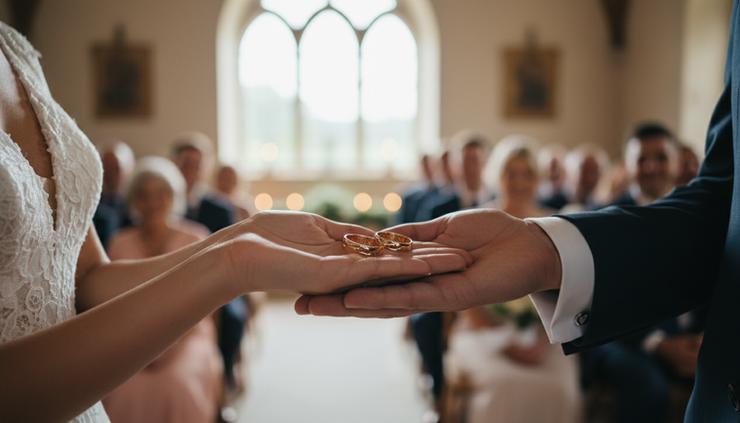
Flowers, table settings, shoes, perfume, rings, stationery, and décor all deserve attention. They show the care that went into the day. Still, the heart of the film is always the people.
It has patience
A timeless edit does not rush every moment. It gives emotion time to land. A look, a breath, or a pause can say as much as a dramatic shot.
It tells a complete story
The film should move through the day with purpose. Preparation, ceremony, celebration, and evening energy all play their part. When joined together well, they create a film that feels whole.

Why storytelling matters so much
A wedding film is built from technical skill, but it is held together by storytelling. Cameras, lenses, audio equipment, and editing software all matter, yet they are tools. The story gives the film its meaning.
Storytelling asks better questions.
Where does the day begin emotionally? Which voices should lead the film? What moments reveal the couple’s personality? Which details deserve space? Where should the pace lift? Where should it settle?
The answers shape the final film.
For some weddings, the emotional centre may be the vows. For others, it may be a parent’s speech, a private letter, a cultural tradition, or the joy of seeing family gathered after a long time apart. A storyteller listens for that centre and builds around it.
This is also why a personal approach matters before the wedding day. Understanding what the couple values helps guide what to look for. Some families are expressive. Others show love quietly. Some couples want the party energy captured in full. Others care most about intimate moments and spoken words.
A strong film does not treat every wedding the same. It pays attention.
The legacy of a carefully filmed wedding day
Planning a wedding takes huge care. It can be joyful, demanding, expensive, emotional, and full of decisions. When the day arrives, it passes quickly. Many couples say it feels as though the hours disappear in a rush.
A wedding film slows that memory down.
It allows the day to be revisited properly, not as a blur, but as a story with texture and feeling. It shows the effort that went into the celebration and the love that filled it. It captures the people who stood beside the couple, the voices that shaped the day, and the moments that deserve to be carried forward.
Timeless Wedding Films to Cherish for Generations are created with that future in mind. They are made for the first emotional viewing, but also for the quiet evenings years later, when the film is watched again with a growing and extended family.
The real value of a wedding film is not only what it gives you now. It is what it keeps safe for later.


Comments